
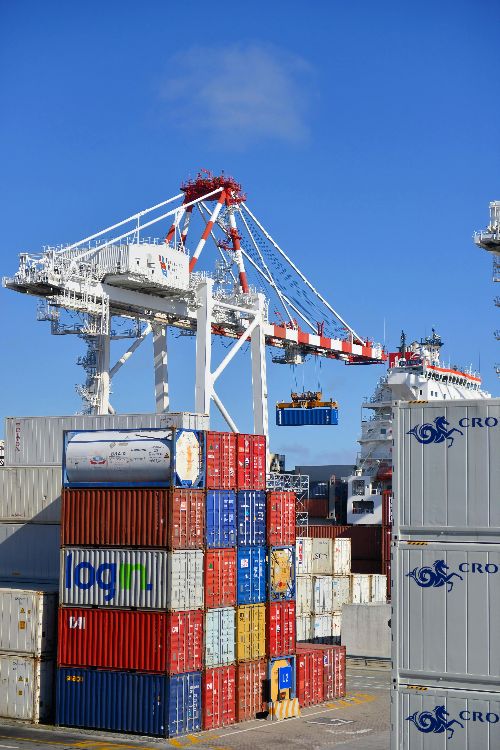
International Freight Forwarders for Global Trade
International freight forwarders play a critical role in global trade. They coordinate carriers, manage customs paperwork, and design transport plans that balance cost, speed, and reliability. Their work supports manufacturers, importers, exporters, and supply chain teams that need dependable cross-border movement. This homepage brings you clear explanations, industry context, and practical information to help you understand how international freight forwarding works and why it matters to modern logistics.
A Complete Guide to Incoterms for Importers and Exporters

Author: Hayden Fletcher
Hayden Fletcher is a logistics specialist with two decades of experience in international freight forwarding and global trade. He breaks down complex supply chain issues into practical insights for shippers and businesses.
In global trade, confusion is expensive. One unclear sentence on a contract can determine who pays for marine insurance, who manages port charges, and who carries the risk the moment a container is lifted at the terminal. That’s why Incoterms, the rules published by the International Chamber of Commerce (ICC), remain one of the most important frameworks in cross-border logistics.
Yet despite their influence, many importers and exporters still misunderstand how Incoterms work—and where their responsibility ends. This guide breaks down the essential concepts, bringing clarity to a system that underpins everything from small e-commerce shipments to multi-million-dollar supply chains.
What Incoterms Actually Do
Incoterms are not laws. They’re globally recognised commercial terms that standardise who handles transport, customs clearance, insurance, and risk transfer during international shipping.
They settle questions that might otherwise create disputes, such as:
Who books the freight?
Who pays port handling fees?
Where does risk transfer from seller to buyer?
Who manages export or import customs?
At what point is the shipment considered delivered?
By clarifying responsibilities in advance, Incoterms reduce uncertainty for freight forwarders, customs brokers, carriers, and insurers.
The 11 Incoterms Explained
The current version—Incoterms 2020—contains 11 rules. They fall into two categories:
For any mode of transport: EXW, FCA, CPT, CIP, DAP, DPU, DDP
For sea and inland waterway transport: FAS, FOB, CFR, CIF
Below is a practical explanation of each, focusing on real-world use by importers and exporters.
Incoterms for Any Mode of Transport
EXW – Ex Works
The seller’s responsibility ends as soon as the goods are made available at their premises.
The buyer handles everything: pickup, export paperwork, freight, import clearance, and delivery.
Commonly used in manufacturing but risky for inexperienced buyers.
FCA – Free Carrier
The seller clears the goods for export and hands them to the carrier at an agreed location.
Risk transfers earlier than most buyers expect, making FCA a modern alternative to FOB for containerised shipments.
CPT – Carriage Paid To
The seller pays the international freight, but risk transfers once the goods are handed to the first carrier.
Buyers must understand that “freight paid” does not mean “risk covered.”
CIP – Carriage and Insurance Paid To
Similar to CPT, but the seller must also provide insurance with higher coverage (as defined by ICC).
Common in higher-value shipments or where buyers demand added protection.
DAP – Delivered at Place
The seller manages the transport up to the buyer’s location, excluding customs clearance.
Risk transfers at final delivery.
A popular Incoterm for e-commerce and B2B shipments.
DPU – Delivered at Place Unloaded
The seller delivers and unloads the goods at the destination.
This is the only Incoterm where unloading is the seller’s obligation.
DDP – Delivered Duty Paid
The seller takes on almost every responsibility—including import customs, duties, and taxes.
Buyers prefer DDP because it eliminates administrative work, but sellers must understand the tax and compliance implications of managing clearance in another country.
Incoterms for Sea and Inland Waterways Only
FAS – Free Alongside Ship
The seller places goods next to the vessel at the port of shipment. Rarely used today.
FOB – Free on Board
Risk transfers when the goods pass the ship’s rail at the port of loading.
Still widely used, but not recommended for containerised freight (FCA fits modern logistics better).
CFR – Cost and Freight
The seller pays for freight to the destination port, but risk transfers at the port of loading.
Buyers must manage insurance and destination charges.
CIF – Cost, Insurance and Freight
Similar to CFR, but the seller also pays for minimum insurance.
Often used for commodities like grain, minerals, or bulk cargo.
Why Incoterms Matter in Modern Supply Chains
Global trade has become more complex, driven by:
Rising freight rates
Expanding free trade agreements
Stricter customs and biosecurity laws
Shifting carrier surcharges
E-commerce growth
Multi-country sourcing strategies
As logistics grows more fragmented, clear Incoterms guard against financial surprises. For example, a buyer choosing CIF might still face high terminal handling charges upon arrival—fees not covered in the contract.
Conversely, a seller offering DDP must understand import tax laws in the destination country, or risk non-compliance.
How to Choose the Right Incoterm
While no single rule fits every situation, businesses often base decisions on:
1. Control Over Freight
Buyers seeking transparency often prefer FOB, FCA, or EXW.
Sellers wanting control might choose CIF, CFR, or CPT.
2. Experience Level
New importers usually avoid EXW and FOB because these place heavy responsibility on them early in the chain.
3. Cargo Value and Insurance Needs
High-value goods benefit from CIP or CIF, which include minimum insurance standards.
4. Destination Country Regulations
DDP can be effective, but only when the seller understands customs duties, GST/VAT, and licensing rules at the final destination.
Common Mistakes Importers and Exporters Should Avoid
Misunderstanding risk transfer
Many assume risk transfers when freight is paid for. Incoterms separate payment responsibility from liability.
Using FOB for containerised cargo
FOB was designed for break-bulk cargo, not containers. FCA is the recommended alternative.
Ignoring destination port charges
Rules like CIF and CFR cover only the main freight leg—not terminal fees, storage, or handling charges.
Assuming Incoterms cover ownership
They don’t govern title transfer—only cost and risk.
Not specifying the precise location
Terms like DAP or FCA must be tied to a clear, agreed delivery point.
Final Thoughts
Incoterms remain a cornerstone of international logistics. They bring structure to a supply chain that spans exporters, importers, carriers, insurers, customs authorities, and freight forwarders. While they can seem abstract on paper, these rules have real-world consequences—affecting costs, risk exposure, delivery timelines, and even business relationships.
For companies importing or exporting regularly, choosing the right Incoterm is less about tradition and more about strategy. The right decision can safeguard margins, prevent disputes, and ensure a clear pathway through complex global trade networks.
Related Articles



Resources
© 2025 Phorums.com.au – All Rights Reserved.